1890s & 1900s
Both Unitarians and Universalists had attempted to establish congregations in Western North Carolina as early as the late nineteenth century. Thomas Wolfe’s maternal uncle, the Rev. Henry Addison Westall preached to a “sparse congregation of Unitarians” who met in an “Upper Room,” probably of the Odd Fellows Hall on Broadway Street. Westall received “a law degree in the South, but gave up the legal profession to study theology at the Harvard Divinity School, where he met Ralph Waldo Emerson, James Russell Lowell, and Henry Wadsworth Longfellow. As a minister he shifted from the Episcopal to the Presbyterian to the Unitarian church—only in the end to abandon the pulpit because he discovered that he was an agnostic.” (David Herbert Donald, Look Homeward: A Life of Thomas Wolfe. Boston: Little, Brown & Company, 1987. 73-74.)
According to Westall’s daughter, between 1894 and 1897, her family lived on Sunset Mountain and on Sundays her father preached in a room “used for civic meetings and band practice, grim, bare and a little shabby, [it] contained, besides rows of wooden settles, only a reading desk and a piano. When my father sat in the high-backed chair his head showed above the lectern so that it seemed to be resting on the Book. The ‘two or three gathered together’ in that place moved on a higher plane than the rest of the town, my father insisted.'” They were mostly from the North and had come “to occupy, for a few months of the year, estates outside of town to which they expected to retire later.” “Besides this small coterie, a doctor or lawyer or two, and the visiting teachers, scientists, artists and writers may have concentrated in the congregation the intellectual cream of the community.” (Elaine Westall Gould, Look Behind You, Thomas Wolfe: Ghosts of a Common Tribal Heritage. Hicksville, NY: Exposition Press, 1976, 33.)
After three years, the Westalls moved back to Massachusetts, where Henry preached to the Unitarian congregation in Medford. Thomas Wolfe visited them frequently during his years at Harvard.
Itinerant Universalist preachers occasionally came to the mountains even before the Civil War. Inman Chapel, Forks of the Pigeon, near Canton, North Carolina, was built in 1902 by the Reverend James Anderson Inman, brother of “Inman” of Charles Frazier’s Cold Mountain fame. He also fought for the Confederacy during the Civil War and was imprisoned in Chicago. Inman had been recognized as a Universalist preacher as early as 1859 and was officially ordained in 1868. After Inman’s death in 1913, the Women’s National Missionary Association of the Universalist Church sent the Rev. Hannah Jewett Powell to continue his work. Inman Chapel advanced a socially progressive ministry that included many firsts for the county and even for the state: a kindergarten, vocational training, a summer school, handicraft classes, adult education classes, a school for African American children, a library, and the county’s first free public health clinic. After the Rev. Powell retired, the congregation declined and closed in 1927. Inman Chapel has been restored and can still be visited. (Phyllis Inman Barnett, At the Foot of Cold Mountain, Waynesville, NC: Pigeon River Press, 2008).
1950s
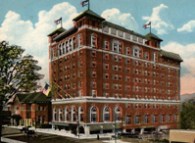
A group of ten spiritual seekers and free thinkers looking for a religious alternative to the community’s conservative Christian churches organized themselves as the Unitarian Fellowship of Asheville on May 9, 1950. The Rev. Lon Ray Call, minister-at-large of the American Unitarian Association, addressed the group at a meeting at the George Vanderbilt Hotel.
The Fellowship clearly met a need. The first issue of their newsletter, dated April 1951, reported a doubling of membership in its first year from ten to twenty-two (and a bank balance of $48.96). At the first annual meeting that May, this committed group determined to become a church and voted to establish a Building Fund.
For two years, members conducted services on Sunday evenings in the basement of the First Congregational Church, and in March 1952 established a church school, meeting Sunday mornings at the Leicester home of George and Muriel Cornell. That December, they moved to one large room and four small ones in the old YMCA building on Grove Street, where they could hold both services and church school classes on Sunday mornings.
The fledgling group enticed summer resident Rev. Horace F. Westwood to speak at Sunday services during the summers of 1953 and 1954. The experience strengthened the congregation’s determination to have a full-time minister. In June 1955 the Rev. Daniel Welch came out of retirement to become our first pastor.
Membership continued to grow, and in December 1956, the congregation bought and converted a large home at 120 Vermont Avenue in West Asheville to use for services and classes. The Fellowship celebrated its first service there January 6, 1957, and soon established a Laymen’s League, a Women’s Alliance, and a Liberal Religious Youth group. During these years, members of the church were active in the League of Women Voters, the YWCA, as well as in efforts to integrate Asheville racially and to establish an Asheville chapter of the American Association for the United Nations. Women members of the church were active in efforts to provide clothing and serve breakfasts to African-American children, as well as assisting African-Americans to vote, and in that process discovered voting irregularities. Jack Boyce, the first president of the fellowship, was active in an effort to bring Eleanor Roosevelt to speak in Asheville. Her address on the United Nations on November 27, 1956 filled the auditorium of the YWCA to overflowing.
Church members remained active in desegregation efforts during the late 1950s and early 1960s. One of the congregation’s first social action awards was presented to an adult advisor to the Asheville Student Committee on Racial Equality, who organized to integrate area schools, business and restaurants.
1960s
In May 1962 the growing congregation, with a membership of 67, was awarded church status by the Unitarian Universalist Association. Rev. Welch took a second retirement in April 1963, after eight fruitful years. The Rev. Richard Gross succeeded him as minister from July 1963 to March 1967, when he left to take a position with the North Carolina Heart Association. By that time church membership had grown to 140. During the next year and a half, the church was without a minister, and membership and attendance dwindled.
In September 1968 the congregation called the Rev. Dr. Tracy Pullman, a leading Universalist, who had recently retired after a 27-year ministry at the Unitarian Universalist Church of Detroit. A month later, in recognition of the 1961 merger of the American Unitarian Association and the Universalist Church of America, the Asheville Unitarian Church changed its name to the Unitarian Universalist Church of Asheville.
Under the Rev. Pullman’s leadership, church membership grew again and it became clear that the church needed a larger building. In early 1969 a committee was appointed to find a site suitable for building a church. In June 1969, Dr. and Mrs. Logan Robertson offered the congregation property at the corner of Charlotte Street and Edwin Place, consisting of three buildings and vacant land. Robertson was the son of Reuben Robertson, Sr., chief executive officer of the Champion Fiber Company in Canton, North Carolina. Logan Robertson was probably named after his maternal uncle, Logan Thomson, for whom Lake Logan, which Champion created by building a dam across the West Fork of the Pigeon River, was also named. Mr. and Mrs. Reuben Robertson often stopped to visit with the Rev. Hannah Powell at the Inman Chapel on their way to their cabin on Lake Logan. This may have sparked their interest in liberal religion. Reuben Robertson later pledged to donate $7,000 annually for three years if this amount could be matched by other donations to the church. In August 1969 the church voted to accept the Robertson family’s offer and the property was officially transferred to the church on April 1, 1970.
1970s
Architect and church member William O. Moore designed a sanctuary, activities building and religious education building, although construction of the latter had to be postponed. Ground was broken for the new building in July 1971, and shortly thereafter Lilian (Paula) Sandburg, widow of the poet Carl Sandburg, announced a gift of $25,000 toward building the social hall, to be named in his honor. Unitarian minister, the Rev. George C.B. Tolleson of Charleston, SC, then a visiting minister in the area and later a member of the congregation, had officiated at Sandburg’s funeral in the St. John in the Wilderness Episcopal Church in Flat Rock, near the Sandburg home in July 1967.
The first service in the new sanctuary was held on May 7, 1972. The building was dedicated October 17 and received a Merit Award for Moore from the North Carolina chapter of the American Institute of Architects three years later. The striking new building and Dr. Pullman’s presence attracted many new members to the thriving church. When Dr. Pullman retired in June 1974, he was named Minister Emeritus in tribute to his service.
The Rev. William Hammond came to the church that September after ministries in Chicago and Grosse Pointe, Michigan and Minnetonka, Minnesota. After his arrival, activities increased both within the church and in the community. The Young Adult group, renamed The Unicorns, became very active, and the Women’s Alliance became the Noonlighters, an adult group for both sexes. Other programs included mini-classes, sharing suppers, and Friday night potluck suppers. The Social Concerns Committee (now Social Action) sponsored a Vietnamese family.
In 1977 a campaign was launched to enlarge Sandburg Hall and add classrooms. Robert Habel chaired the Long-Range Planning Committee, and George Love and Lois Thompson co-chaired the Building Completion Committee. The Unicorns generously matched an anonymous donor’s gift of $10,000, and the addition opened in September 1980, just in time for the church’s thirtieth anniversary. Also, during this time, in 1979, the church hired its first director of religious education, Janet Harvey.
1980s
Upon Rev. Hammond’s retirement in August 1983, the congregation named him Minister Emeritus. In September 1983, the Rev. James Brewer became the church’s fifth minister. Following a long experience in human relations internationally, especially in South Africa, Rev. Brewer returned to the parish ministry in 1980, serving as interim minister to Unitarian Universalist churches in Chicago, Toronto, Portsmouth, New Hampshire, and Westport, Connecticut before coming to Asheville.
The congregation again saw strong growth in membership and the founding of a choir under church member Bill Frisch. In 1987 a house next door to the church was purchased; two years later it was dedicated as the Thomas Jefferson House.
1990s
The Rev. Brewer retired in August 1990, and the congregation voted him Minister Emeritus the following January. The Rev. Dr. William Houff was interim minister during the yearlong search for a new settled minister. A former research chemist, Dr. Houff was also a committed social activist, photographer, outdoorsman, carpenter, and author of a well-received book on spiritual growth, Infinity In Your Hand.
The Rev. M. Maureen Killoran was called as UU Asheville’s sixth settled minister in May 1991. Reared a Roman Catholic in Toronto and first trained in social work, the Rev. Killoran became a Unitarian Universalist in 1967. She came to Asheville after having served five years as minister of the Unitarian Universalist Congregation of Salem, Oregon, her first settlement. During her ministry here she continued her education and received her doctorate in ministry. Under Rev. Killoran’s leadership the congregation grew significantly, eventually exceeding 600 members, and expanded its Sunday worship offerings from one to two services.
During this period the size and complexity of the religious education program grew significantly. In November 1991 the church ordained its director of religious education, Janet Harvey, as minister of religious education. After the Rev. Harvey left in 1994, Laurel Amabile of Yarmouth, Maine, was hired as director of religious education. Under Mrs. Amabile, the religious education program grew to nearly 200 children and youth and saw an increase in involvement by families, children and youth in worship and social action projects. These included an all-church partnership with the Helpmate program and the two-year Leadership Ethical Action Program, conducted in partnership with The Mountain’s Milestone Learning Center. That program culminated with a “CommUnity Asheville 2000” festival held in downtown Asheville on June 2, 2000. Mrs. Amabile left in July 2000 to become religious education consultant for the Thomas Jefferson and Midsouth districts of the UUA, and Rebecca Young was hired as director of religious education.
Under Rev. Killoran’s leadership the church also provided support and advocacy for gays and lesbians in the community, holding one of the area’s first World AIDS Day services, organizing an Interweave group in the church and being recognized by the UUA in 1995 as a Welcoming Congregation. For a period of time, the church provided space for the Metropolitan Community Church of Asheville, a Christian church for gay, lesbian, bisexual and transgender people.
In the late 1990s the growing church explored options for growth and assisted in the founding of the Unitarian Universalist Congregation of the Swannanoa Valley in Black Mountain. In September 1980 some UU Asheville members and others had formed the Unitarian Universalist Fellowship of Hendersonville; the Unitarians and Universalists of Transylvania County formed in Brevard in 1990.
2000s
Dr. Killoran retired in December 2002 and was named Minister Emerita; she chose to focus her work on community ministry as a life coach. The Rev. Dr. Neil Shadle, a retired professor of ministry from Meadville/Lombard Theological School in Chicago, relocated to Asheville and served as interim minister from January 2003 through June 2004. A consultant for many years to Unitarian Universalist churches, Dr. Shadle provided pastoral guidance and support to the congregation as it dealt with issues of transition and preparation for a new era, assisted the Board in reorganizing the church staff, spearheaded the development of an endowment and planned-giving program, initiated an all-church Program Council, advised the leadership in defining a more comprehensive mission for the Committee on Ministry, strengthened the effort in membership recruitment and orientation, and introduced a planning process for the exploration of a covenant group program.
In this period of transition there were changes in staffing and in staff structure. Marilyn Martin of the office staff was named church administrator, Lenora Thom, director of the Asheville Choral Society, was hired as director of music, and Kirstie Fischer, youth advisor, was named director of religious education.
The Rev. Mark Ward, a 2004 graduate of Meadville Lombard Theological School, was called as the church’s seventh settled minister in April 2004 and began his ministry in August 2004. A lifelong Unitarian Universalist who had been active as a lay leader, he came with twenty-five years’ experience as a newspaper journalist, primarily in Milwaukee, Wisconsin. Rev. Ward served his ministerial internship at the First Unitarian Society in Madison, Wisconsin, one of our denomination’s largest churches, and was installed and ordained by the church in February 2005 at a ceremony held at the Diana Wortham Theater.
Under Rev. Ward’s leadership the church developed a “Covenant Group” program of small group ministry and, with new growth in membership, returned to two weekly Sunday worship services in the fall of 2005. A major project was completed in the summer of 2006 that included renovations to Sandburg Hall, the Religious Education space and the Sanctuary.
Rev. Ward continued the church’s witness for social justice by announcing from the pulpit in February 2006 that, to show his opposition to the state law preventing same-sex couples from legally marrying, he would not sign marriage licenses until the law was changed. In 2005 the Board voted to make the church a Life Member of the NAACP. In 2007 the congregation hosted Building Bridges, a community anti-racism program. In July 2006 Taryn Strauss was hired as the Director of Religious Education, replacing Kirstie Fischer.
The Rev. Sarah York, a member who had been ordained by the congregation on May 30, 1982, was hired in July 2007 as part-time Assistant Minister for Pastoral Care. She had served congregations in California, Massachusetts, Florida, New York, North Carolina, Virginia, Maryland and London, England. Rev. York is the author of Remembering Well: Rituals for Celebrating Life and Mourning Death, Pilgrim Heart: The Inner Journey Home, The Holy Intimacy of Strangers, and a meditation manual, Into the Wilderness.
The congregation continued to grow, and lack of space became a major issue, especially for the Religious Education program. In the fall of 2008, a short-term solution presented itself. The building at One Sunset Parkway, originally built in 1926 to house the Women’s Club of Asheville —directly across Charlotte Street from the campus—was for sale. The Board made a purchase offer, which was accepted. However, in the meantime, the national economy had fallen into a severe recession. Following a congregational meeting to discuss the purchase, a decision was made by the Board not to pursue the purchase of One Sunset Parkway.
In January 2009, the Board determined that UU Asheville should remain at its current Edwin Place location and maximize use of the campus to enable the congregation to grow and offer appropriate programs. They appointed members of a Campus Development Steering Committee that, in August, recommended that the Board select Padgett & Freeman Architects to lead the congregation through the design phase of the campus development project. After a series of meetings for members of the congregation to voice their opinion, a design concept for an addition to the current building and renovation of the sanctuary to improve handicapped access was approved in October.
In January 2008, Linda Kooiker was hired to fill the newly created part-time position of Membership Coordinator.
2010s
In June 2011, Taryn Strauss resigned from her position as Director of Lifespan Religious Education (during her tenure, programming for adult religious education was added to her list of responsibilities) to take a similar position at the Unitarian Church of All Souls in New York City.
Also in June 2011, Rev. Sarah York retired as part-time Assistant Minister of Pastoral Care. It was obvious to all that a full-time rather than part-time minister was needed to provide the guidance and care that the congregation required, yet the budget could not sustain a full-time salary. To address that dilemma, the Board chose to make use of a portion of a large bequest to develop a five-year staffing plan that would allow the immediate hiring of a full-time assistant minister with the bequest being applied to the operating budget income in diminishing amounts as the congregation’s commitment levels rose. As a result of that decision, Rev. Lisa Bovee-Kemper was hired as the congregation’s full-time assistant minister. On September 13, 2014, Rev. Bovee-Kemper was installed as UU Asheville’s Associate Minister. Also included in the Board’s five-year plan was the hiring of Benette Sherman as the new director of lifespan religious education, a highly experienced and well-regarded UU professional.
In the time period from about 2009 to 2013, the Board of Trustees researched and began experimenting with a change in governance. In order to gain clarity among the roles of staff and Board, the Board created a working document called the “Governance Document” that lays out the responsibilities of the Board and staff regarding the leadership and management of the congregation. This Governance Document is unique to UU Asheville, having been written by members of the congregation to generally follow the ideas of Rev. Dan Hotchkiss and John and Miriam Carver while specifically addressing the desires and needs of this congregation.
In October 2011, the property at 23 Edwin Place owned by the Leona B. Robinson family came on the market at a reasonable asking price. By January 2012 the congregation generously contributed enough funds to purchase the property and perform the necessary maintenance and repairs to begin using the new space. The addition of this property in January of 2012 completed the long-held dream of owning the entire block bounded by Charlotte Street, Bond Street, Celia Place and Edwin Place.
In August 2012, Dr. Linda Topp was named as interim church administrator, replacing Marilyn Martin. Dr. Topp was hired as the Director of Administration in February 2013. At this same time, the congregation officially changed its name to the Unitarian Universalist Congregation of Asheville.
2015-2016 Welcoming Project
Following the renaming of UUCA, the congregation took on an extensive project to make the church building more welcoming to visitors and more accessible to people with mobility problems. A large sign with the new name was created along Edwin Street.The foyer was expanded to provide more room for Sunday morning greeting and ease of entering and leaving Sandburg Hall during coffee hour. A wall was moved and the sanctuary floor raised to create a new, accessible, level entry to seating in sanctuary, and a ramp was built to connect the parking lot with the main floor, without any stairs. A handicapped, unisex restroom was added to the fellowship hall and lighting and sound were enhanced in the sanctuary and fellowship hall.
The project also involved many changes to the campus to make it more environmentally in line with UUA 7thprinciple. In an effort to assure that rainwater falling on our site remains on the site to recharge the groundwater and be available for our trees , we created rain gardens off Edwin Place and behind Jefferson House that capture and retain that water as well as water from our roofs, allowing it to be drawn back into the soil and made available to native vegetation planted above it.
In August 2018, Rev. Bovee-Kemper became the consulting minister of the Greenville, SC UU fellowship and Rev. Claudia Jiménez was hired as UU Asheville’s first Minister of Faith Development.
In 2019, Rev. Ward announced that his plan to retire at the end of June 2020. Then the Covid pandemic hit! Realizing that it would be difficult for the congregation to search for an interim minister during the pandemic, Rev.Ward offered to delay his retirement until June 2021. The Board gratefully accepted his offer. Rev. Ward retired June 30, 0221. Rev. Dr. Cathy Harrington was hired as Interim Minister . Unfortunately, Mark had a short retirement, dying unexpectantly in July 2022. Members have been greatly saddened by his passing.
On June 30, 2022, Director Of Administration Dr. Linda Topp retired. Wendy Motch-Ellis was appointed Director of Administration in October 2022.

Our History
A Brief History of UU Asheville
We’ve been here in Asheville since 1950, becoming an official member congregation of the Unitarian Association when we first were chartered in 1955 and then joining the Unitarian Universalist Association (UUA) in 1962, after the merger of the two denominations. After inhabiting our first worship space on Vermont Avenue in West Asheville for 15 years, we moved to our present location on Edwin Place in 1972. A history of our current site can be found below. During our 60th anniversary year in 2010 we produced an historical narrative summarizing our past up to that point.
1890s & 1900s
Both Unitarians and Universalists had attempted to establish congregations in Western North Carolina as early as the late nineteenth century. Thomas Wolfe’s maternal uncle, the Rev. Henry Addison Westall preached to a “sparse congregation of Unitarians” who met in an “Upper Room,” probably of the Odd Fellows Hall on Broadway Street.
1930s
The American Unitarian Association sent ministers to the area for brief preaching missions in the hope of generating interest. That campaign to spread the Unitarian message, chaired by Walter S. Adams, editor of the Asheville Citizen, culminated with a series of radio addresses by Dr. Howard Westwood and Rev. Owen Eames. The area’s bad economic situation, though, deterred their efforts and the campaign to start a congregation in Asheville was postponed.
1950s
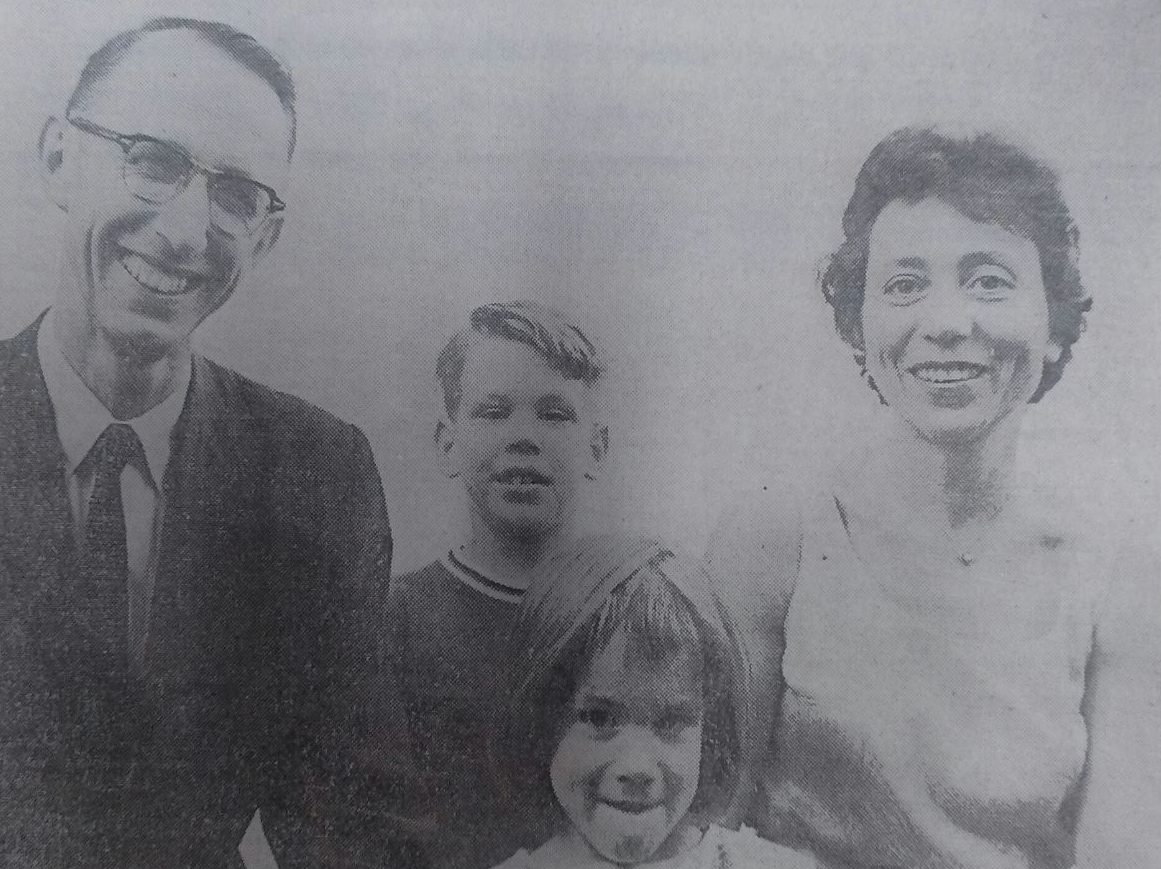
A group of ten spiritual seekers and free thinkers looking for a religious alternative to the community’s conservative Christian churches organized themselves as the Unitarian Fellowship of Asheville on May 9, 1950. The Rev. Lon Ray Call, minister-at-large of the American Unitarian Association, addressed the group at a meeting at the George Vanderbilt Hotel.
1960s
In May 1962 the growing congregation, with a membership of 67, was awarded church status by the Unitarian Universalist Association. Rev. Welch took a second retirement in April 1963, after eight fruitful years. The Rev. Richard Gross succeeded him as minister from July 1963 to March 1967, when he left to take a position with the North Carolina Heart Association. By that time church membership had grown to 140.
1970s
Architect and church member William O. Moore designed a sanctuary, activities building and religious education building, although construction of the latter had to be postponed. Ground was broken for the new building in July 1971, and shortly thereafter Lilian (Paula) Sandburg, widow of the poet Carl Sandburg, announced a gift of $25,000 toward building the social hall, to be named in his honor
1980s
In September 1983, the Rev. James Brewer became the church’s fifth minister.
The congregation again saw strong growth in membership and the founding of a choir under church member Bill Frisch. In 1987 a house next door to the church was purchased; two years later it was dedicated as the Thomas Jefferson House.
1990s
The Rev. M. Maureen Killoran was called as UU Asheville’s sixth settled minister in May 1991. She came to Asheville after having served five years as minister of the Unitarian Universalist Congregation of Salem, Oregon, her first settlement. Under Rev. Killoran’s leadership the congregation grew significantly, eventually exceeding 600 members, and expanded its Sunday worship offerings from one to two services.
2000s
Dr. Killoran retired in December 2002 and was named Minister Emerita; The Rev. Dr. Neil Shadle, served as interim minister from January 2003 through June 2004. A consultant for many years to Unitarian Universalist churches, Dr. Shadle provided pastoral guidance and support to the congregation as it dealt with issues of transition and preparation for a new era, assisted the Board in reorganizing the church staff, spearheaded the development of an endowment and planned-giving program, initiated an all-church Program Council, among other initatives.
2010s
In June 2011, Rev. Sarah York retired as part-time Assistant Minister of Pastoral Care. It was obvious to all that a full-time rather than part-time minister was needed to provide the guidance and care that the congregation required, yet the budget could not sustain a full-time salary. To address that dilemma, the Board chose to make use of a portion of a large bequest to develop a five-year staffing plan that would allow the immediate hiring of a full-time assistant minister.
Recent History & Current Events
For a more detailed look at the last few years at UU Asheville, check out our Annual Reports. Every year the staff and lay leaders compile reports on what they’ve planned and accomplished the previous year. You can find the last 10 years of annual reports here.
Ministerial Staff
Over our history, the Unitarian Universal Congregation of Asheville has been served by 14 ministers; including lead ministers, part-time assistant ministers, a full-time associate minister, and a Minister of Faith Development. Each of our ministers has helped us grow into the active and vital congregation that we are today and for their service to us, we thank them.
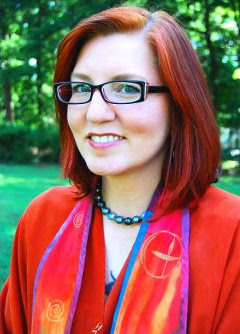
Rev. Dr. Audette Fulbright Fulson
Lead Minister, 2023 to Present

Rev. Dr. Cathy Harrington
Interim Minister, 2020-2023

Rev. Mark Ward
Lead Minister, 2004-2020
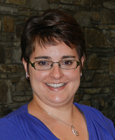
Rev. Lisa Bovee-Kemper
Associate Minister, 2011-2018

Rev. Sarah York
1/3-time Assistant Minister, 2007-2011

Rev. Dr. Neil Shadle
Interim Minister, 2003-2004
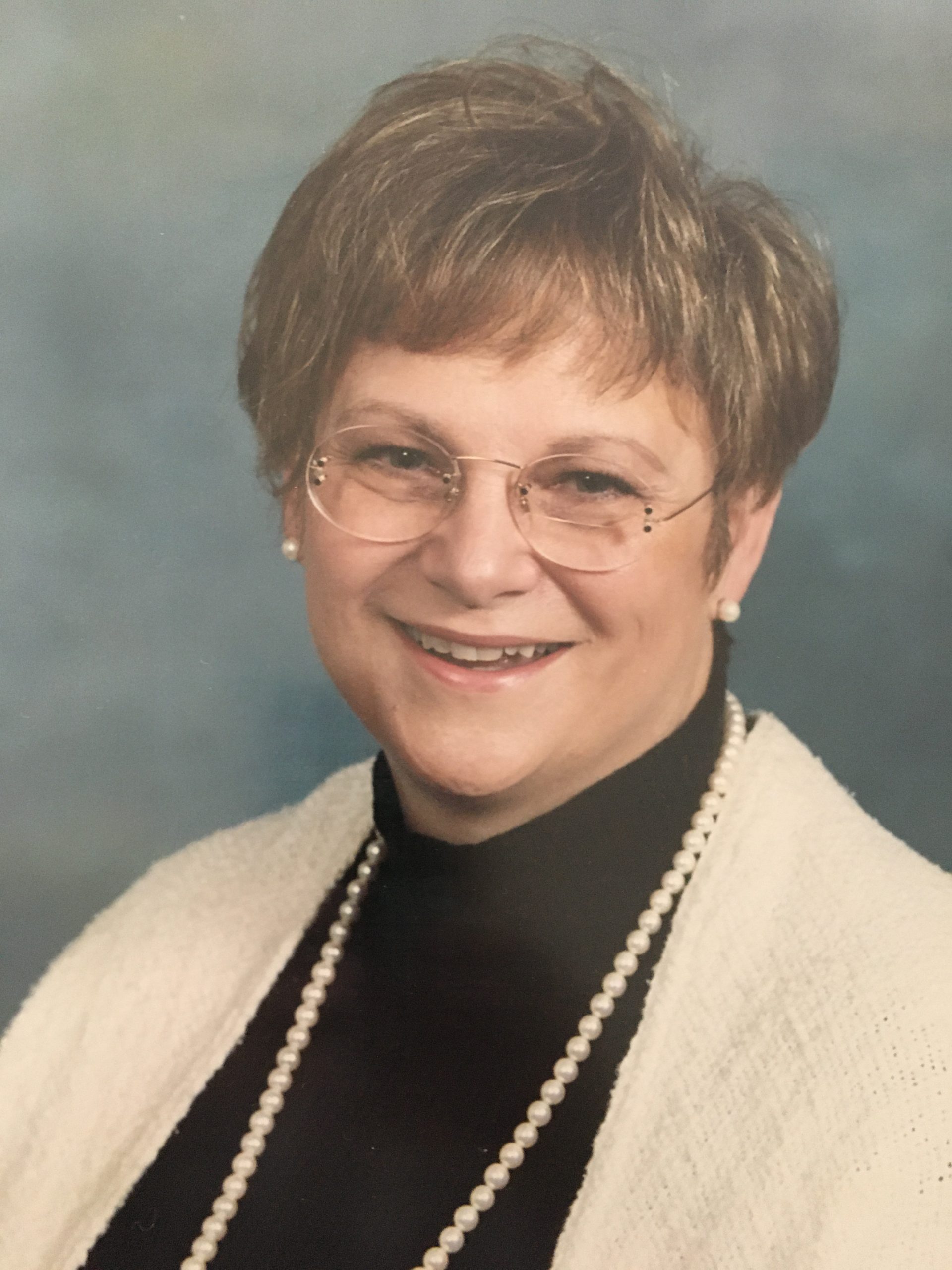
Rev. Dr. M. Maureen Killoran
Minister Emerita, 1991-2002

Rev. Dr. William Houff
Interim Minister, 1990-1991

Rev. James Brewer
Minister Emeritus (Lead Minister), 1983-1990

Rev. William D. Hammond
Minister Emeritus (Lead Minister), 1974-1983

Rev. Dr. Tracy M. Pullman
Minister Emeritus (Lead Minister), 1968-1974
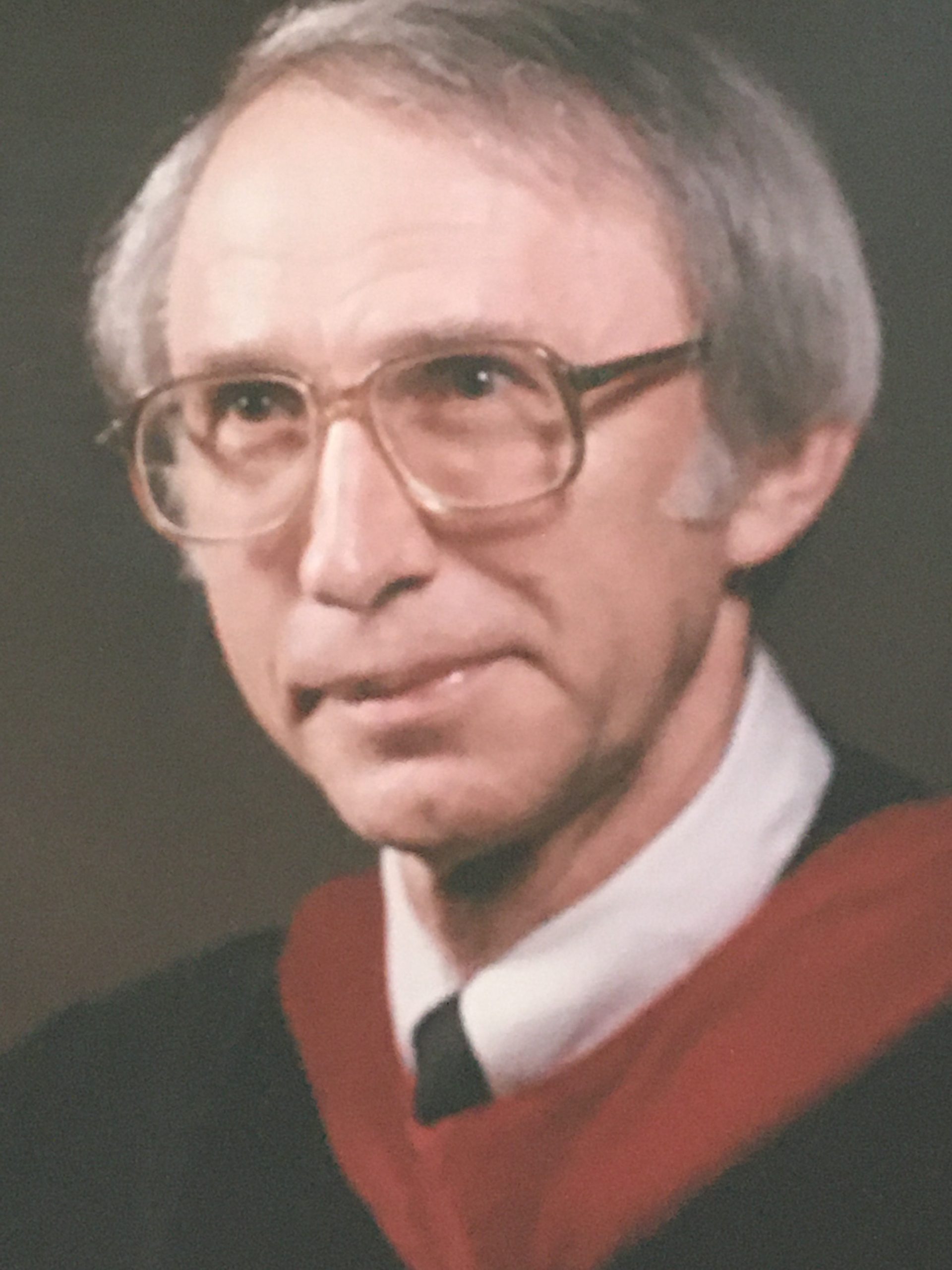
Rev. Dick Gross
Minister Emeritus (Lead Minister), 1963-1967
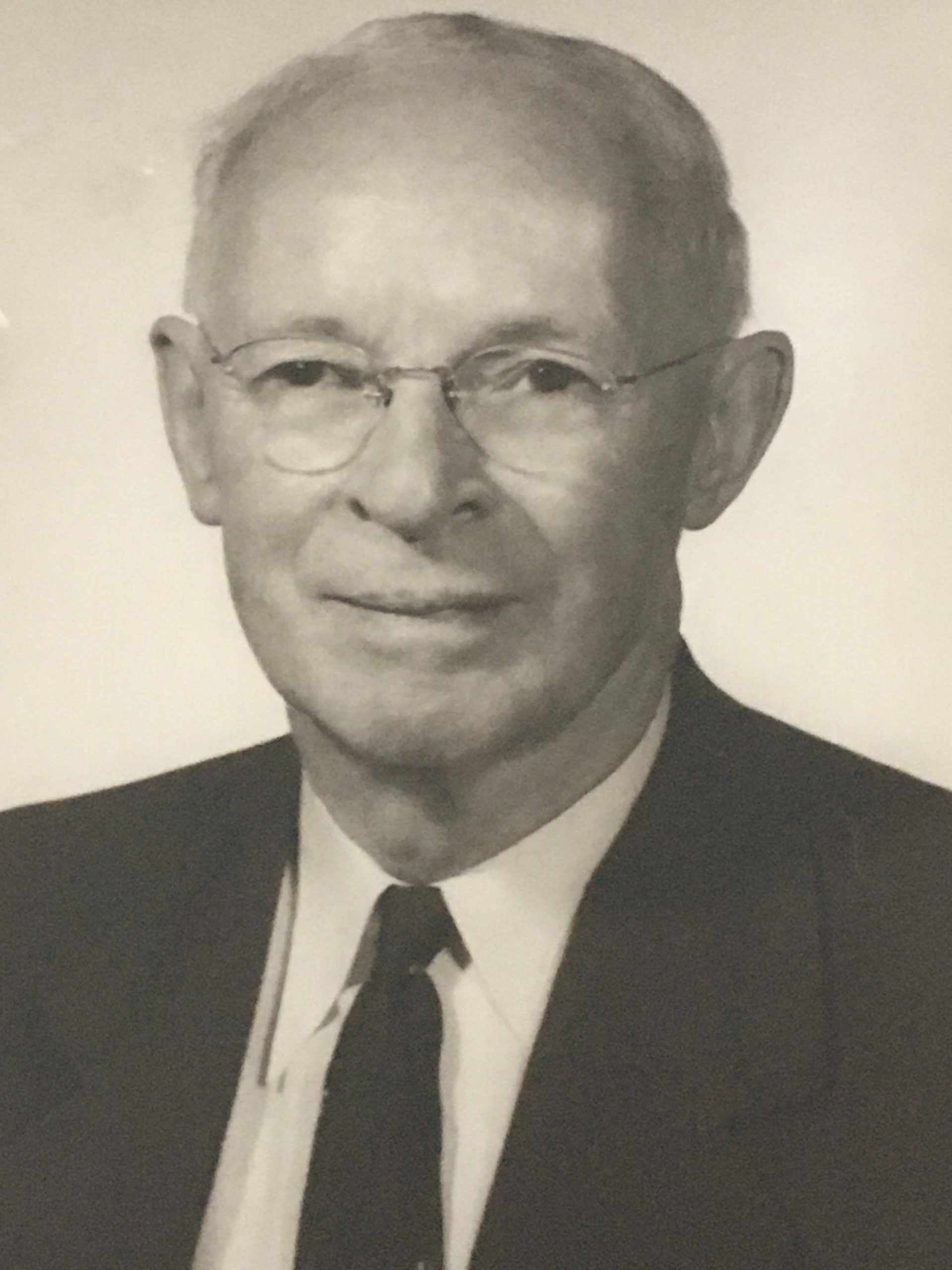
Rev Daniel M. Welch
Minister Emeritus (Lead Minister), 1955-1963